- Driving Cost Savings and Operational Efficiency
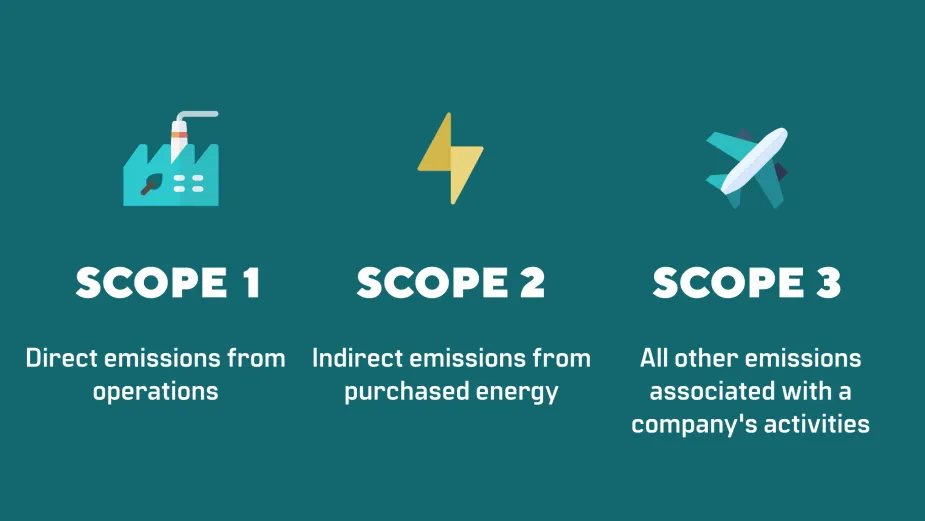
Measuring and managing emissions can highlight inefficiencies across a company’s operations and supply chain. For example, reducing energy consumption (Scope 2) through efficiency upgrades or transitioning to renewable energy can lead to substantial cost savings over time. Optimizing supply chain logistics and materials usage (Scope 3) can reduce waste and lower overall costs. Giants like Nestlé reported millions of dollars in savings by adopting more sustainable supply chain practices.
- Mitigating Risks and Building Resilience
Climate change brings many business risks, from supply chain disruptions caused by extreme weather events to changing market dynamics and resource scarcity. By managing their emissions comprehensively, organizations can identify vulnerabilities in their value chain, mitigate risks, and build resilience against climate-related impacts. Organizations that invest in renewable energy and sustainable supply chain practices will be less exposed to fluctuating energy prices and disruptions.
- Meeting Stakeholder Expectations
Stakeholders, including customers, employees, investors, and partners, expect everyone to demonstrate a strong commitment to sustainability. Addressing all three scopes shows that an organization is serious about its environmental responsibilities and takes a holistic approach to climate action. This can help attract top talent, secure investments, and strengthen partnerships. Industry leaders like Patagonia and Salesforce have gained significant market traction and employee loyalty by embedding sustainability into their business strategy.
- Unlocking In-Ovation and New Market Opportunities
Reducing emissions can drive innovation by encouraging organizations to reimagine their products, services, and business models. Proactively addressing your carbon footprint will create new opportunities in emerging markets, such as renewable energy, circular economy products, or carbon offsetting services. Engaging in sustainability efforts can also lead to collaborations and partnerships that drive growth and generate new revenue streams.
Steps for Businesses to Take to Manage and Reduce GHG Emissions
Successfully reducing greenhouse gas emissions requires a far-reaching approach that covers the three scopes. Here is what you can do to manage and reduce your GHG emissions:
Conduct a GHG Inventory
Start with a detailed GHG inventory to identify and quantify all emissions sources across Scopes 1, 2, and 3. Use tools like the GHG Protocol’s Corporate Standard or specialized software to ensure accuracy and consistency. The inventor provides a baseline that helps identify the most significant emission sources and sets the stage for developing a targeted reduction strategy.
Set Science-Based Targets
Align your emissions reduction targets with the latest climate science to ensure they participate in global efforts to limit temperature rise to 1.5°C above pre-industrial levels. Science-based targets provide a clear roadmap for reduction and demonstrate a commitment to meaningful climate action. Many organizations, like IKEA and Microsoft, have set ambitious targets, as verified by the Science Based Targets initiative (SBTi).
Improve Energy Efficiency
Invest in energy-efficient technologies, processes, and practices to decrease energy consumption, such as upgrading lighting and HVAC systems, optimizing manufacturing processes, or implementing energy management systems. Recently, Siemens significantly reduced its Scope 1 and 2 emissions by upgrading its facilities to more energy-efficient standards and implementing smart energy management practices.
Transition to Renewable Energy
Purchasing or generating renewable energy to power your operations means signing power purchase agreements (PPAs), installing on-site renewable energy sources, or buying renewable energy certificates (RECs). Google, for instance, has committed to running on 100% renewable energy and has invested in large-scale solar and wind energy.
Engage the Supply Chain
Encouraging your suppliers to adopt sustainable practices will help address scope 3. To do that, you can provide resources, incentives, and tools to help suppliers improve their energy efficiency, reduce waste, and switch to renewable energy. For example, Walmart launched Project Gigaton to encourage its suppliers to reduce greenhouse gases from its supply chain by 2030.
Build Sustainable Products
Incorporate sustainability into product design to minimize emissions across the product lifecycle, including using recycled materials, designing for energy efficiency, or planning for end-of-life recycling. For example, Apple designs its products focusing on recyclability and has introduced a robot named “Daisy” that disassembles iPhones to recover valuable materials.
Prone Circular Economy Practices
Adopt circular economy models to reduce waste and emissions, leading to rethinking business models to prioritize product reuse, repair, and recycling. Fast fashion giants like H&M heavily invest in circular fashion initiatives, such as clothing recycling programs and sustainable materials, to reduce their Scope 3 emissions.
Offset Unavoidable Emissions
For emissions that cannot be eliminated, invest in high-quality carbon offsets that fund projects to capture or reduce greenhouse gasses elsewhere. While offsets should not be the primary strategy, they can help achieve net-zero goals when complementing direct reduction efforts. BP, for example, is investing in reforestation and renewable energy projects to offset some of its unavoidable emissions.
Real-Life Examples of GHG Emission Reductions
Unilever
As part of its ambitious commitment to become a carbon-neutral company by 2039, Unilever took multiple steps to reduce its GHG emissions. The company sources 100% of its electricity from renewable sources for all its operations and has invested in energy-efficient technologies in its manufacturing facilities. For Scope 3 missions, Unilever works closely with its suppliers to improve sustainable sourcing practices and reduce emissions throughout its supply chain. The company also engages with consumers to promote lower-impact lifestyles, such as reducing water usage and waste.